
What is a Table of Specifications (TOS)?
A Table of Specifications (TOS) is a crucial planning tool, often referred to as a “test map,” that guides educators in the construction of valid and comprehensive tests. It acts as a blueprint, ensuring that the test accurately reflects the content taught and the learning objectives set for the unit or course.
The primary goal of the TOS is to ensure balance within the assessment. This balance is critical in two aspects:
- Content Coverage: Ensuring all major topics and learning outcomes are adequately represented.
- Cognitive Demand: Ensuring an appropriate mix between items that test Lower Level Thinking Skills (LOTS), such as simple recall, and those that test Higher Order Thinking Skills (HOTS), such as analysis and evaluation, based on Bloom’s Taxonomy.
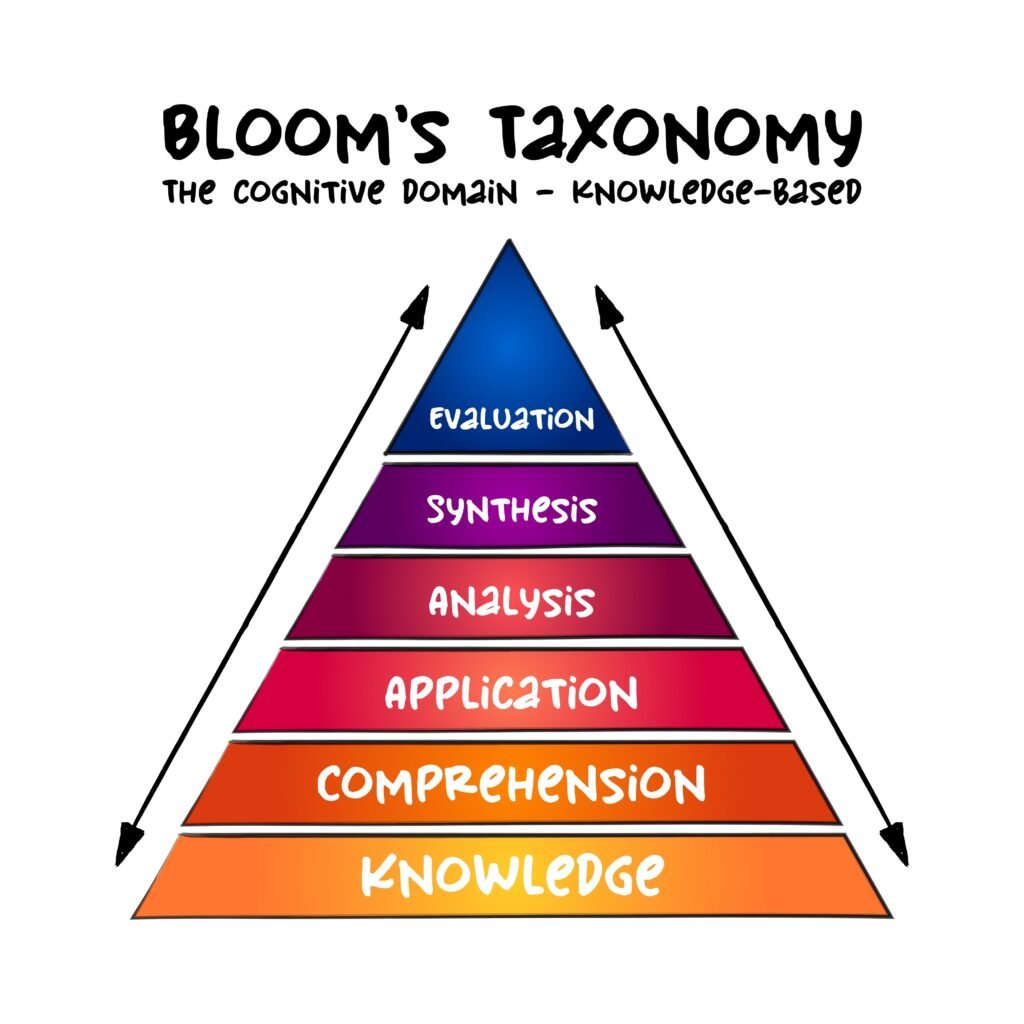
Without a TOS, teachers often inadvertently overemphasize simple factual recall (the Knowledge level), resulting in a test that is neither comprehensive nor effective at measuring deep student learning.
Components of a Simple Table of Specifications
The simplest and most effective TOS typically consists of four key columns, helping the teacher systematically align teaching, learning, and assessment:
- Level of Objective to be Tested (Cognitive Level): This usually refers to the specific level of Bloom’s Taxonomy (e.g., Knowledge, Comprehension, Application, Analysis, Synthesis, Evaluation).
- Statement of Objective: The specific learning outcome the students were expected to achieve (e.g., “The student will be able to explain the causes of the French Revolution”).
- Item Numbers: The specific numbers of the questions in the test that address this objective (e.g., Items 1, 3, 5, 7, 9).
- Number of Items and Percentage: The total count of test items dedicated to that objective and the calculated percentage of the total test score they represent.
How the TOS Guides Test Construction
The structure of the TOS provides explicit direction for the teacher.
For instance, if a sample TOS shows that five items are dedicated to the Knowledge level (e.g., Items 1, 3, 5, 7, 9) and five items are dedicated to the Synthesis level (e.g., Items 12, 14, 16, 18, 20), the teacher is immediately directed to write an equal number of questions for these two cognitive demands.
Furthermore, the TOS can guide the weighting of different assessment types. If the first four cognitive levels of Bloom’s Taxonomy are each represented by five items (5 points each), while the Application objective is tested through an essay worth ten points, the TOS ensures that the assessment’s structure is intentional—in this case, giving double the weight to a complex, applied skill.
In summary, the TOS ensures that every objective within the curriculum is appropriately represented in the final assessment, resulting in a fair, balanced, and truly comprehensive test.
